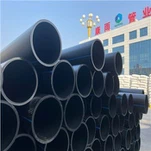
When comparing High-Density Polyethylene (HDPE) and Polyvinyl Chloride (PVC), both materials are widely used in industrial and consumer applications, particularly in piping, packaging, and construction. While HDPE and PVC share many similarities as durable, versatile plastics, they also have distinct differences that make each material better suited for specific uses. This article will delve into a detailed comparison of HDPE and PVC, covering their properties, applications, benefits, drawbacks, and environmental impact, ultimately exploring which material is better depending on the application.
1. Material Composition and Structure
HDPE is a polymer made from the monomer ethylene (C₂H₄) through polymerization, resulting in long, linear chains of molecules with little to no branching. This linear structure gives HDPE its high density, strength, and toughness. HDPE is known for its excellent resistance to chemicals, moisture, and impact, making it suitable for a wide variety of heavy-duty applications.
PVC, on the other hand, is made from the polymerization of vinyl chloride (C₂H₃Cl), a chemical compound that contains chlorine atoms. PVC's structure can be either rigid or flexible, depending on the inclusion of plasticizers. Rigid PVC, commonly used in construction materials and piping, has a more crystalline structure, giving it stiffness and durability. Flexible PVC, which is softer, is often used in applications like wire insulation and flooring.
While both HDPE and PVC are thermoplastics (meaning they can be melted and reshaped), their different chemical compositions give them unique characteristics that affect their performance in various environments.
2. Physical and Mechanical Properties
Strength and Durability
HDPE is known for its superior strength-to-density ratio. It has high impact resistance and can withstand significant stress without breaking or cracking. HDPE's linear molecular structure results in stronger intermolecular forces, which makes it tough, especially in challenging environments. For example, HDPE pipes can endure harsh conditions, including exposure to chemicals, moisture, and extreme temperatures. This durability is why HDPE is often used in industrial piping, geomembranes, and containers.
PVC, particularly in its rigid form, is also strong and durable but slightly more brittle than HDPE. PVC's rigidity allows it to maintain its shape well, making it suitable for structural applications such as piping and window frames. However, it is more prone to cracking or breaking under stress, especially in cold temperatures, where PVC can become brittle and susceptible to damage.
Flexibility
HDPE is more flexible than rigid PVC, which allows it to bend without breaking. This flexibility makes HDPE better suited for applications where the material must accommodate movement or pressure changes, such as in piping systems where temperature variations cause expansion and contraction. Additionally, HDPE pipes are less likely to fracture due to ground movement, making them ideal for underground installations in areas prone to seismic activity or soil shifting.
PVC, while available in both rigid and flexible forms, generally lacks the same level of flexibility as HDPE. Rigid PVC pipes cannot flex as easily, which can limit their use in certain dynamic environments. However, flexible PVC can be used in situations that require some degree of movement or bending, but it does not match the flexibility and toughness of HDPE.
Chemical Resistance
Both HDPE and PVC exhibit excellent resistance to chemicals, but HDPE has a slight edge in this area. HDPE is highly resistant to a wide range of chemicals, including acids, bases, and solvents, making it suitable for applications where exposure to hazardous substances is a concern. For example, HDPE pipes are often used for transporting chemicals and sewage, as they can handle corrosive environments without degrading.
PVC is also chemically resistant, particularly to acids and alkalis. However, it can be more vulnerable to certain organic solvents, such as ketones and chlorinated hydrocarbons, which can cause it to soften or degrade over time. As a result, while PVC is effective in many chemical applications, HDPE may be a better choice for highly corrosive or extreme chemical environments.
Temperature Tolerance
In terms of temperature tolerance, HDPE performs better at lower temperatures, maintaining its toughness even in cold conditions, whereas PVC becomes brittle in similar environments. HDPE can handle temperatures as low as -40°C, making it ideal for outdoor and underground piping in cold climates. On the other hand, PVC has a higher maximum temperature resistance, capable of withstanding heat up to 60°C (140°F) in most applications. This makes PVC suitable for hot water piping systems and other high-temperature uses.
However, neither material is suitable for extreme heat applications. Prolonged exposure to temperatures above their melting points (around 120°C for HDPE and 80°C for PVC) can cause them to deform or degrade.
3. Applications of HDPE and PVC
Both HDPE and PVC are used in similar industries, but their specific properties make each material more appropriate for certain applications.
HDPE Applications:
Water and gas distribution piping
Chemical storage tanks
Packaging containers, like bottles and plastic bags
Geomembranes for environmental protection
Plastic lumber for outdoor structures
Playground equipment and toys
HDPE's flexibility, chemical resistance, and toughness make it ideal for piping in water distribution, chemical transport, and sewage systems, as well as in applications that require durability and impact resistance.
PVC Applications:
Drainage and waste piping
Electrical conduit and cable insulation
Building materials like window frames and siding
Flooring and roofing materials
Medical devices like blood bags and tubing
Industrial coatings and membranes
PVC's strength, rigidity, and formability make it a good choice for building materials and electrical applications. In medical settings, flexible PVC's softness and biocompatibility are advantageous.
4. Environmental Impact
Both HDPE and PVC have environmental considerations due to their petroleum-based origins and non-biodegradability. However, there are key differences between the two in terms of their environmental footprint.
HDPE: HDPE is generally considered to have a smaller environmental impact than PVC, primarily because it can be recycled more efficiently. HDPE is widely recycled into products like pipes, plastic lumber, and packaging. Additionally, HDPE production generates fewer harmful by-products compared to PVC.
PVC: PVC production involves the use of chlorine, which can release toxic compounds like dioxins during manufacturing and disposal. These chemicals are harmful to both human health and the environment. While PVC can be recycled, its recycling process is more complicated and less widespread than HDPE recycling. Furthermore, PVC often contains additives, such as plasticizers, which can leach into the environment.
In terms of longevity, both HDPE and PVC have long lifespans, especially in applications like piping, which reduces the need for frequent replacement and lowers material waste over time.