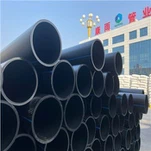
There are several methods that can be used to connect steel pipe to HDPE. One common method is through the use of mechanical couplings. Mechanical couplings are designed to join two different types of pipes together, in this case, steel pipe and HDPE. They typically consist of two components, a locking ring and a gasket, both made of high-quality materials that are designed to withstand high pressure and temperature conditions.
To connect the steel pipe and HDPE using mechanical couplings, first, the ends of the pipe should be cut and deburred. Next, the mechanical coupling is placed over the end of the steel pipe and tightened using a wrench or socket. Then the gasket is placed inside the groove of the coupling, and the end of the HDPE is inserted through the gasket and pushed firmly into the coupling until it reaches the steel pipe. The mechanical coupling is then tightened to securely hold the two pipes together.
Another method that can be used to connect steel pipe to HDPE is through use of electrofusion. Electrofusion creates a strong, reliable connection between the two pipes, and is particularly useful for high-pressure applications. Electrofusion is a process in which an electric current is passed through a fitting that has been placed between the steel pipe and HDPE, causing the material to melt and fuse together. This creates a permanent, leak-proof connection that can withstand extreme physical and environmental conditions.
It is important to note that when connecting steel pipe to HDPE, it is crucial to use the correct materials and techniques to ensure the connection is strong and reliable. Proper installation is also essential for ensuring a safe and long-lasting connection. It is always recommended to consult with a professional when working with pipes to ensure best practices are being followed to prevent any damage or harm.