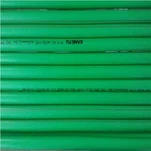
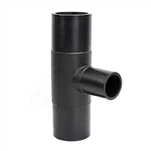
At present, the PPR water pipe market is mixed, and it is difficult to distinguish the good from the bad with the naked eye, which brings a lot of risks and troubles to consumers' purchase. Here to remind consumers, we must be careful when purchasing. At present, there are many manufacturers of PPR pipes. The raw material of PPR pipes is polypropylene (random copolymerized polypropylene). The products produced with different brands of raw materials have certain differences in performance. In addition, the grades of production lines are different, and the quality of PPR pipes produced by various manufacturers varies greatly. When PPR pipes are used, they must be inspected before installation and can be used only after the quality is qualified.
The selected pipes shall first have the quality inspection report of the quality inspection department, and the pipes used for drinking water shall also have the hygienic performance inspection report of the hygiene inspection department. Then, the appearance quality, pipe diameter and wall thickness of pipes and fittings shall be inspected according to GB / T18742 22002、GB/T18742. National standards such as 32002 mainly inspect the following items:
1. PPR pipe appearance. The color and luster of the pipe shall be basically the same, and the internal and external surfaces shall be smooth and flat, free of depression, bubbles and other surface defects affecting the performance, and shall not contain visible impurities; The surface of pipe fittings shall be smooth and flat, without cracks, bubbles, peeling, obvious impurities, serious shrinkage, uneven color, decomposition and discoloration and other defects.
2. The opacity of PPR pipes. The pipe shall be opaque.
3. PPR pipe diameter and wall thickness. According to GB / T18742 2-2002 national standard, pipes are divided into S5, S4 and S3 according to size 2、S2. 5. S2 five series. There is a corresponding relationship between pipe series s and nominal pressure. The pipe specification is expressed by pipe series s, nominal outer diameter DN * nominal wall thickness en. It mainly tests the nominal outer diameter, average outer diameter, wall thickness corresponding to the pipe series, socket size of pipe fittings and corresponding nominal outer diameter.
4. Physical, mechanical and chemical properties of PPR pipes. Whether hydrostatic test, melt mass flow rate, thermal stability test under hydrostatic state, longitudinal retraction rate of pipe and impact test of simply supported beam comply with the provisions of national standards, which can check the contents of material inspection report and retest report.
5. Whether the hygienic performance of PPR pipes meets the provisions of national standards. This item can check the sanitary performance inspection report of the sanitary inspection department on the pipe.
6. System suitability. After the pipes and fittings are connected, they shall pass the combined test of 8760 hours internal pressure and 5000 thermal cycles.