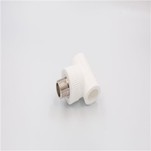
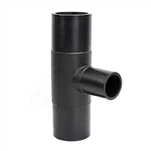
1. The water resistance of PPR pipe material is expressed by softening Vicat coefficient. The softening Vicat coefficient of water-resistant materials has obvious advantages in heating, high-temperature hot water, open laying installation and outdoor water supply and drainage pipeline application. The softening coefficient indicates the degree of strength reduction of the material after immersion in water, which generally fluctuates between 0-1. The smaller the softening coefficient, the lower the strength of the material after water absorption and saturation, so the worse its water resistance. For the materials of important structures often located in water or seriously affected by moisture, the softening coefficient should not be less than. The softening coefficient of materials with light moisture or secondary structures shall not be less than 0.75. Materials with softening coefficient greater than 0.80 can generally be considered as water-resistant materials.
2. The phenomenon of thermal expansion and cold contraction of pipes is also inevitable. The PPR pipeline selected from water-resistant materials has enhanced rigidity and is not easy to sag when laying pipes horizontally, which increases the beauty of the pipeline, improves the bending resilience of the pipeline, and remains stable in shape at high temperature.
3. The connection and anti leakage performance of water-resistant pipe fittings should also be paid attention to. Due to the analysis of the characteristics of the pipe, the PPR pipe brand production line has designed and produced a special aluminum stripping tool to peel off the aluminum layer and the outer layer of PPR, which can also be connected by hot-melt socket method, which eliminates the cause of easy leakage in the connection of ordinary PPR pipe with copper pipe, and better is the pipe to realize its water resistance.